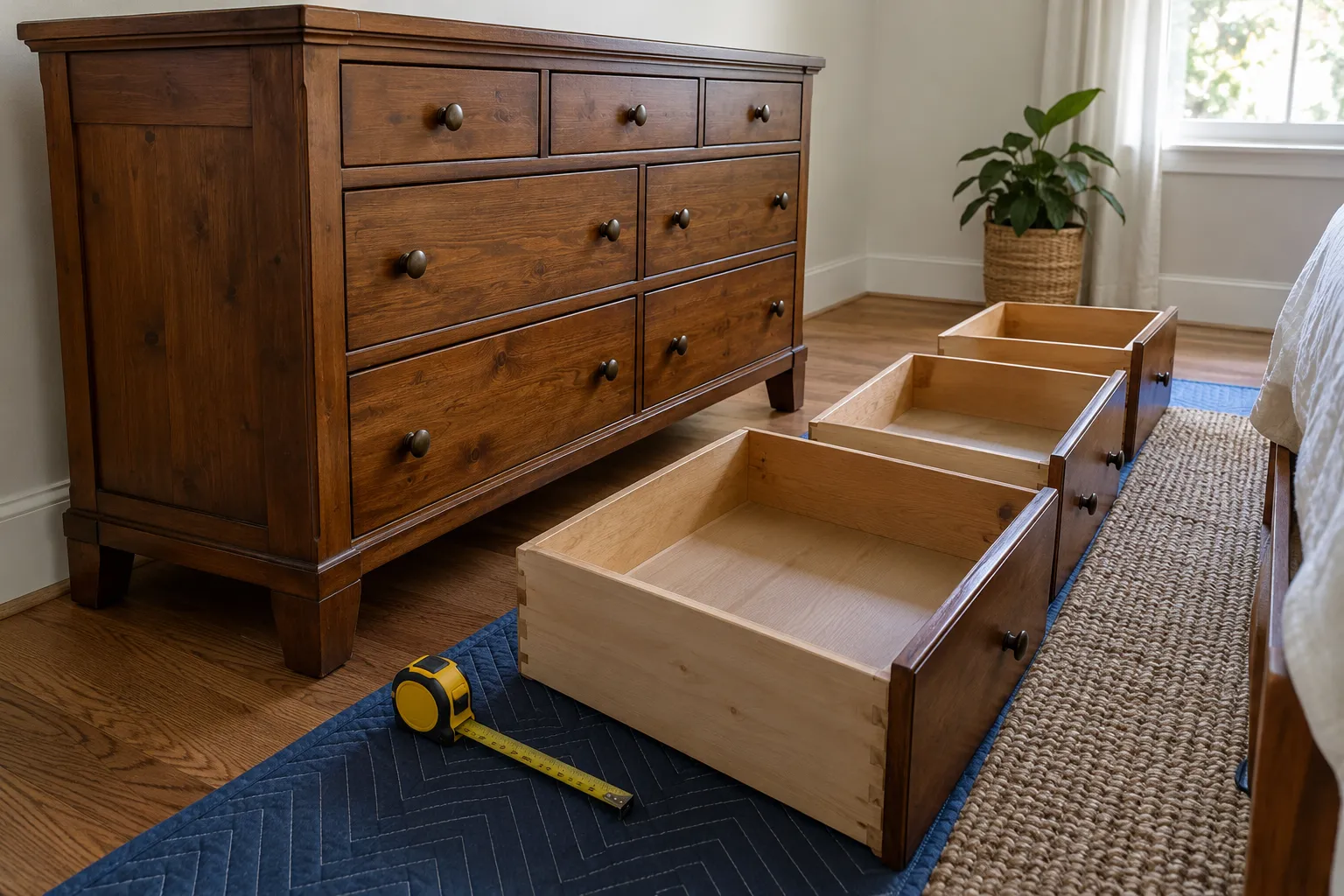
Empty the drawers unless the provider gives different instructions. Contents add weight, shift during turns, and can damage drawer slides or spill onto the route.
Empty and sort the contents
Remove clothing, jewelry, papers, liquids, and breakables. Check behind drawers and beneath drawer liners. Keep personal documents and valuables with you rather than placing them with the furniture.
Handle drawers and mirrors separately
Ask whether drawers should be removed or secured. Detachable mirrors, glass shelves, and stone tops need separate assessment and protection. Do not rely on weak tape that can mark a finished surface.
Measure the case and the path
Record dresser width, height, and depth. Compare them with the doorway, hall, stair turn, and landing. Mention a tall or top-heavy piece so the crew can plan for controlled handling.
Dresser-ready checklist
- All drawers empty
- valuables removed
- mirror or glass identified
- dimensions recorded
- loose parts contained
- route cleared
- stairs and turns disclosed
- walls and floors accessible for protection
When to ask for an assessment
Stop and ask for help when the piece is unusually heavy, built in, powered, attached to a wall, made with a fragile top, or difficult to reach safely. Share photos and measurements with the provider instead of testing a risky lift.

